Cybersecurity for Small Businesses
Cybersecurity for small businesses is no longer something that can be treated as optional. Phishing, ransomware, stolen passwords, and data breaches can interrupt daily operations, expose sensitive information, and create unexpected costs. Smaller companies often have limited time, staff, and security resources, which makes practical protection especially important. SecureBizTech provides clear guidance to help you strengthen your security, protect important data, reduce common risks, and choose tools that make sense for a smaller team.
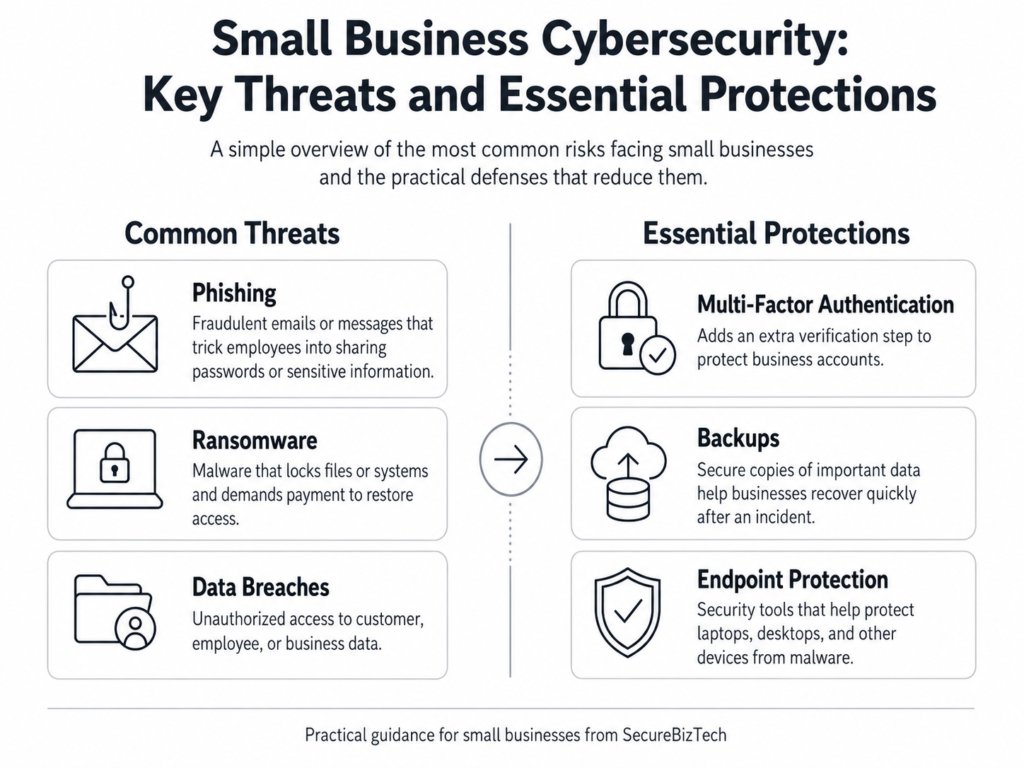
Common Cybersecurity Threats for Small Businesses
Ransomware
Ransomware can lock business files and systems and demand payment to restore access. Small businesses should use reliable backups, endpoint protection, and regular software updates to reduce the risk.
Phishing
Phishing attacks try to trick employees into revealing passwords, financial information, or other sensitive data. Staff awareness, email filtering, and multi-factor authentication can greatly reduce the danger.
Data Breaches
A data breach can expose customer information, employee records, or confidential business data. Strong access controls, encryption, secure passwords, and regular monitoring are important safeguards.
Essential Cybersecurity Tools
The right cybersecurity tools can help small businesses reduce risk, protect sensitive information, and respond more effectively when something goes wrong. Not every company needs an expensive or complicated security setup, but a few well-chosen tools can make a meaningful difference. The most useful options usually focus on protecting devices, securing accounts, filtering suspicious activity, and keeping important data recoverable.
Endpoint protection
Endpoint protection helps secure laptops, desktops, and other devices against malware, ransomware, and suspicious activity. For small businesses, a centrally managed solution can make protection easier to maintain across every device.
Email Security
Email is one of the most common entry points for cyberattacks. Spam filtering, phishing protection, and safe-link scanning can reduce the risk of employees opening malicious messages or attachments.
Password Managers
A password manager makes it easier to create and store strong, unique passwords for business accounts. It also reduces the temptation to reuse the same password across multiple services.
Backup Solutions
Reliable backups can limit the damage caused by ransomware, hardware failure, or accidental deletion. Small businesses should keep regular backups and make sure at least one copy is stored separately from the main system.
Multi-Factor Authentication
Multi-factor authentication adds an extra layer of security by requiring more than a password to sign in. It is one of the simplest ways to reduce the risk of account takeover.
Simple Cybersecurity Steps Every Small Business Should Take
Good cybersecurity does not always require expensive tools or a large IT team. Many risks can be reduced by following a few consistent habits, such as keeping software updated, using strong authentication, backing up important data, and limiting unnecessary access. These practical steps can help small businesses strengthen everyday security and reduce the impact of common attacks.
Keep Software Updated
Outdated software can leave known security weaknesses open to attack. Turn on automatic updates where possible and regularly check important business systems, browsers, plugins, and devices for pending updates.
Use Multi-Factor Authentication
Enable multi-factor authentication on email, cloud storage, banking, administrative accounts, and other important services. Even if a password is stolen, the extra verification step can make unauthorized access much harder.
Back Up Important Data
Create regular backups of files your business cannot afford to lose, and keep at least one backup separate from your everyday systems. Test your backups occasionally so you know they can actually be restored when needed.
Train Employees to Recognize Scams
Employees should know how to spot suspicious emails, unexpected login requests, unusual payment instructions, and unfamiliar links or attachments. A few simple habits can prevent many common attacks.
Limit Access to Sensitive Information
Give employees access only to the systems and information they need for their work. Remove old accounts promptly and review administrator privileges from time to time.
Use Strong, Unique Passwords
Avoid reusing passwords across business accounts. A password manager can help employees create strong passwords without having to remember every one of them.
Cybersecurity Guides for Small Businesses
As SecureBizTech grows, this section will bring together practical guides on the security topics small businesses deal with most often. Each guide will focus on clear steps, realistic risks, and tools that are useful for smaller teams.
Ransomware Protection
Learn how to reduce the risk of ransomware and prepare your business to recover if an attack happens.
Phishing Prevention
Understand common phishing tactics and the simple habits that can help employees avoid them.
Endpoint Security
Explore ways to protect laptops, desktops, and other business devices from malware and unauthorized access.
Password Security
Learn how password managers, strong passwords, and multi-factor authentication can reduce account compromise.
Backup and Recovery
Build a backup strategy that helps protect important business data from loss, ransomware, and hardware failure.
Need Help Choosing Cybersecurity Tools?
SecureBizTech also reviews and compares cybersecurity products for small businesses, including endpoint protection, password managers, backup services, and other security tools.
For additional guidance, small businesses can also review the NIST Cybersecurity Framework 2.0 Small Business Quick-Start Guide.